In MECK Pre-K classrooms, the day follows a predictable rhythm designed to help young children feel secure, engaged, and ready to learn. Arrival routines, learning centers, small-group instruction, whole-group activities, outdoor play, meals, and reflection all work together to create a consistent daily structure.
This structure is not accidental. It reflects a core principle of early childhood education: young children learn best when they can anticipate what comes next and feel supported through transitions. In fact, according to the National Association for the Education of Young Children (NAEYC), “Routines and transitions are an essential part of building a supportive classroom for young children.” NAEYC: Daily Routines and Classroom Transitions
Why Routines Matter in Early Learning
Routines give children a sense of safety and predictability. When children know what to expect throughout the day, they are better able to focus their attention, build relationships, and engage in learning experiences.
Transitions—moving from one activity to another—are also a key part of this structure. In MECK Pre-K classrooms, teachers intentionally support children through these moments so they become opportunities for learning rather than disruptions. Over time, this consistency helps children develop independence, confidence, and self-regulation skills that support kindergarten readiness and beyond.
What This Looks Like in MECK Pre-K Classrooms
Families often describe how quickly children adapt to the rhythm of the school day and how excited they are to participate in it. Here’s what real MECK Pre-K families have had to say:
“Once she’s dressed, she’s very excited about getting to school and seeing her friends.”
“My child absolutely looks forward to going to school every morning! They love getting to be with their friends and adore all their teachers.”
Even after a busy morning dropoff, children often transition quickly into learning and engagement once the classroom routine begins.
Learning Across the Entire Day
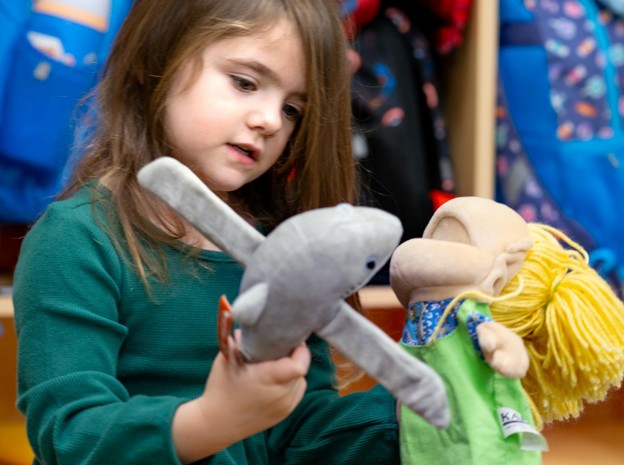
In MECK Pre-K classrooms, routines structure the day—but learning happens within every part of it. Children move through centers, group lessons, play-based exploration, outdoor time, and creative activities. Families often notice how much their children talk about what they experience at school.
“My child tells me all about the fun lessons they learn… recognizing letters, signs, stores, etc.”
“He talks about what he learned at school. He loves center time.”
These everyday experiences build language, confidence, and curiosity—skills that grow through repetition, structure, and meaningful interaction.
Growing Independence Through Routine
A consistent classroom routine helps children begin to take ownership of their learning. As they become familiar with expectations and transitions, families often see growth in independence and confidence.
“My child has become more independent since starting Pre-K… they are now recognizing tons of letters and come home wanting to practice their writing.”
“My son’s vocabulary has grown. It’s so cute to hear him say ‘actually.’”
These milestones reflect what happens when children are supported by predictable, responsive classroom environments—they begin to see themselves as capable learners.
Relationships Make the Routine Work
Routines are most powerful when paired with strong relationships between children and teachers. In MECK Pre-K classrooms, teachers help guide children through the structure of the day with warmth, consistency, and care. Families frequently highlight this connection:
“You can tell the teachers really enjoy and care for the children.”
“Mrs. Kay is wonderful—she teaches with love and is very focused and disciplined.”
“I really appreciate the communication with the teachers and how they show that they care about my son.”
These relationships help children feel secure, which allows them to fully engage in learning and transitions throughout the day. Teachers love it too! As one MECK Pre-K teacher told us:
“One morning routine that sets a positive tone in our classroom is our daily greetings. Each child is welcomed by name with a smile, eye contact, and a choice of greeting, which helps them feel seen, valued, and ready to start the day in a positive way.”
More Than a Schedule
In MECK Pre-K classrooms, routine is not simply a schedule—it is the foundation for how children experience learning, relationships, and growth. As research tells us, routines and transitions are central to creating supportive learning environments for young children. In practice, this means designing days that are predictable yet flexible, structured yet playful, and always responsive to children’s needs.
Together, these elements create classrooms where children are not only prepared for kindergarten—but are confident, independent, and excited to learn.
About MECK Pre-K
MECK Pre-K is a high-quality pre-K program open to all four-year-old children in Mecklenburg County at no cost to families. Classrooms are located in licensed childcare centers and taught by licensed teachers and highly qualified assistant teachers. You can apply online at MeckPreK.org.
Do you have a child who is not old enough for pre-K this year? Sign up for our email list and be notified when they’re eligible for MECK Pre-K. Simply go to MECKPrek.org/future-meck-pre-k-students and select your child’s age group.